Thursday, October 27, 2011

Reduce the Amount of Food Wastage


As a child my parents raised and taught to me never waste my food. My mother strongly believes you shouldn't waste food because think about all the children who are poor and left hungry. I am not allowed to simple ask if I can eat my dinner later or keep it for tomorrow and so I have grown accustomed to making sure all my food is eaten before I put my plate away. Some children, however, are brought up in a completely different way. They are raised by parents that have little to no appreciation for the food that they are given, this causes them to act in the same ignorant way that the parents have. After they have learnt the wrong way their future generations are affected as well. This continuous cycle will go on for several years unless they are taught and influenced by another to value the food that is placed on their plate and treat it with respect.


A news article that relates to this topic is Food Waste On Staggering Scale, BBC. Did you know that 3.6 million tons of food is wasted every year in England and Wales alone. The Waste & Resources Action Program (WRAP) discovered that the most common food that was wasted were fruits, breads and salads. However that was not the only interesting part, 60% percent of the all the dumped food was untouched. This was because they were either out of date or they were just unwanted. Liz Goodwin, the chief executive of WRAP was shocked by the amount of food wasted by the British, not only was this an environmental issue but it was an economic one too. Liz Goodman said "It highlights that this is an economic and social issue, as well as about how much we understand the value of our food." In this last part of the quote she describes how people are not respecting the food that they are paying for with well-earned money. This links back to what I said before about the value food in the Introduction. If people were more aware of how valuable food is then the amount of wasted food would decrease drastically.


                         Christopher Haskins


However, ignorance to the amount of food we waste on a day to day basis is not the only reason we end up wasting a lot of our food. Lord Haskins, the government advisor of food and farming, claimed. 'We are risk averse. We're obsessed with sell-by dates, so much so that we throw away perfectly good food which happens to be out of code.' Most families are cautious of food poisoning, this isn't bad, however, if we buy or cook too much food and don't eat all of it, we end up throwing away the either untouched food or leftovers. Sell-by date and best before dates only give the customer a better idea on when the food will stay fresh or taste its best. These labels are mandatory in most countries so that people aren't eating rotten food or buying it either. So if you see that there is a food in the supermarket that is 'out of date' do not be hesitant in buying it, just because it is out of code doesn't mean it's bad for you.


In July 2006 an article was written by Sean Coughlan named Food for Thought. This article explains ways out of wasting leftovers and untouched foods. The simple way would be to only buy or cook what you will eat. But most people can't gage the amount of food their family and they will eat. Coughlan explains to the reader that wasting food isn't so bad if you were to compost the leftovers. Millions of tons of edible food are thrown into landfills everyday. We can reduce this number by composting our food. You can compost your food in almost every country in the world, even in small towns it is possible. Last year Mr. Housego introduced to the families and staff of ISKL the idea of composting. He set up a system and it worked as follows; the family or staff member fills their compost bin and brings it to school, every week Mr. Housego would send the compost to a farmer that gave back, in return for the compost, soil. Mr. Housego then passed on the soil to the supplier and the cycle continued. But that is not the only thing that ISKL does to reduce the amount of wasted food, in the canteen you may have noticed the Waste Food bins that are placed near the trash can and where you put your dirty plates. This is yet another example of how ISKL is doing their part in reducing the amount of wasted food. If more schools and families followed this regime the millions of tons of food would be reduced.


So the next time your not hungry but you still have food on your plate consider any of the following solutions, composting, eating it later or asking someone else if they want it. We can also remind our friends and families not to waste their food, even such a small thing can go a long way. Remember, there is always a way out of food waste!


What is Composting?

The Forth Resource Management describes composting as '...a natural process by which organic materials are broken down by micro-organisms, effectively cooking and breaking down the ingredients. Many materials can be composted, for example grass cuttings, leaves and branches. When done properly, composting will kill harmful bugs and bacteria and produce a safe, sterile end product.'


Picture URLS:


http://palscience.com/wp-content/uploads/2010/10/food-waste-stop.jpg


http://www.bbc.co.uk/radio4/factual/media/Lord_Haskins_of_Skidby2.jpg


http://www.shetlandrealnappies.org/images/WRAP.gif


Tuesday, September 27, 2011

Taking A Stand

We strongly believe that you should go out on a limb.
We implore you to cleverly oppose society.
To challenge with determination the manner that has somehow tragically infected our generation.
We have walked with conviction, yet nothing has happened.
By actually talking we have noticed that somehow
the challenge of wisdom has aggressively frightened society
and disguised conviction.

By Rachel McKinley and Georgina Irvine

Sunday, September 18, 2011

What is Worth Fighting?


Abolish Slavery.

Throughout history many brave notables have stood up against slavery. However, today I will only be telling of two. The first being Abraham Lincoln, who abolished slavery in America. Next I will be talking about is Harriet Tubman, who helped over 300 slaves escape from the United States to Canada. Noth of these people helped abolish slavery around the world.


Abraham Lincoln
Abraham Lincoln was the 16th President of the United States, who served from 1861 to 1865, when John Wilkes Booth assassinated him. In 1863 Lincoln abolished slavery. He once said ‘I have always thought that all men should be free; but if any should be slaves, it should be first those who desire it for themselves, and secondly, those who desire it for others.’ I think this quote implies that nobody should be forced to become a slave against his or her will. Those slaves should be given the chance to live freely among all other people, no matter what nationality, religion, rich or poor, skin colour, and others, everyone should be treated equally and have the same opportunities. However, if, for some reason, there had to be slaves, Lincoln believes that the slaves should be those who want the slaves purely for self-desire or for desire of others. They should have to go through what millions of other human beings suffered and worked hard for, just so people around the world can have appliances and products. People shouldn’t be able to use and control others for their own selfish reasons, and if they really need someone to work hard for them, they can either find someone who actually wants to work for them or they could just do it them self because it is unfair for others to have to do the tasks that you should be able to do yourself. Abraham Lincoln was a fair man and he died for trying to help all those poor slaves who were starving, tired, and poor because of others who treated them like animals, but people should all be given the same opportunities and chances, not just be working unnecessarily all their life for some other person who gets to relax and get paid for when the hard working people are basically getting nothing for all the work that they do.


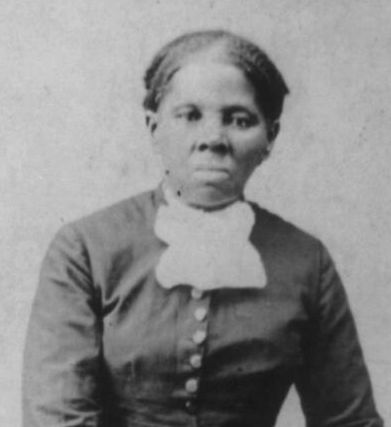
Harriet Tubman
Harriet Tubman is recognised as the ‘Moses of her people’ because of her brave act against slavery. She was named this because from 1850 to 1858 she lead over 300 slaves from America into freedom. Harriet Tubman was born into a life of slavery in Dorchester County, Maryland, in 1820. In 1848 Tubman decided to runaway from her plantation, leaving her husband and the rest of her family behind. Later she decided to return to Maryland to free her family and friends. Tubman would free the slaves by transporting them through the underground railways. She would take them to St. Catherines, Ontario, Canada. This was the perfect place to take black slaves because in St. Catherines white and black people lived equally in comfortable houses. 
“If you hear the dogs, keep going. If you see the torches in the woods, keep going. If there's shouting after you, keep going. Don't ever stop. Keep going. If you want a taste of freedom, keep going.” This inspirational quote was said by Harriet Tubman. She believed that however hard things get, however difficult things may seem, don’t stop trying. Keep going. Tubman never gave in, she had so many chances to stop and live a comfortable life, to live in peace. She had hundred of chances to surrender, to let the people who enslaved her kind win. But she never let them. She stood firm in her convictions and went on to freeing hundreds of slaves in America.

  Harriet Tubman and Abraham Lincoln’s actions inspire us to fight for what we believe in. They stood firm in their beliefs and went on to bring change in their society. Because of Tubman and Lincoln many people have fought for what they think is or isn’t right, or what they think should or should not be happening. The actions that these significant and brave men/women have done has had an enormous impact on our world today. They have stood up against slavery and have inspired others to fight for what they believe in.

I believe in abolishing slavery because people should not be forced to work against their will for little pay. They should at least get a chance to be free and live normal lives. I think that it is wrong for people to be treated the way that slaves are being treated because they are ones doing the actual work, but they are ones being payed less and treated worse, when it should be the other way round. The slaves should be payed at a higher rate, they should be treated as equals and not as animals.


Thursday, September 1, 2011

The Utopian Society


  Maurice Strong once said ‘After all, sustainability means running the global environment - Earth Inc. - like a corporation: with depreciation, amortization and maintenance accounts. In other words, keeping the asset whole, rather than undermining your natural capital. ’ I believe  that this quote by, Maurice Strong, means that in order for us to have a sustainable society we must value our resources, instead of trying to defy them. The Oxford Dictionaries describe the word sustainability as ‘conserving an ecological balance by avoiding depletion of natural resources.’ If I were to create a new world I would hope that it would be environmentally sustainable.  

 Sustainability is important for it allows for growth and development because it gives the new civilizations and generations a reliable future, allowing them to thrive in their natural habitat. In this day and age, the human race is multiplying at an alarming rate, and we are consuming more and more of our natural habitat. This may not seem as a problem to many, however, while the human population grows our natural resources are lessening. If we are to keep consuming at this rate, then in the future our supplies will be limited. What we do now has a huge effect on how our future will turn out to be.  

In my ideal world, everyone will value and encourage their children to sustain the environment and their natural habitat. People in this society will work towards reducing their carbon footprint. They will also seek to increase their positive impact on the environment, as well as decreasing their negative impact. Many societies have endeavored to achieve this characteristic, and unfortunately have failed. However, this does not mean that we should give up hope, sustainability is worth the effort.          


IMAGE URL: http://goldschmidt.info/2008/sustainability.jpg 

Thursday, March 10, 2011

Hunger Games Assessment Blog Posts

Identity Charts:

 We chose to do the Identity Charts for our project because throughout the book they introduce many new characters that are very important to the book. We decided to do Cinna, Effie Trinket and Peeta Mellark. These characters are significant to the book because they had a vital part to Games. Peeta Mellark, helped Katniss create the 'star-crossed lover' effect on the Capitol, it helped her and Peeta get sponsors while they were in the arena. Without Cinna Katniss wouldn't have had so much of an effect on the Capitol, and the people who lived there, because Cinna made Katniss memorable. Effie Trinket helped Katniss, she told Katniss about what she should and shouldn't do, and if she wasn't here Katniss may have done something really bad. The book describes the personalities of the characters and we thought that the best way to show the personality traits would be through an Identity Chart. 

Here are the Identity Charts:

Cinna Above, Effie Trinket Bellow :)


Key Symbols:

We decided to include Key Symbols in our project because through out the book there are many repeating symbols. Some of they were significant to the story, but others were not. We chose to do the Mocking Jay Pin, which was considered a sign of rebellion and District 12. We also chose to do the Dandelion, which for Katniss represented Hope. Another symbol we chose to do was the Cannon. The Cannon blew when a tribute had died in the Games. The Tracker-Jackers, another key symbol, signified the fact that the Capitol will do anything to have control. We also chose to do Rue's flowers. These flowers were the ones that Katniss chose to do, it represented rebellion and Rue. Last but not least we chose to draw a banquet, food from the Capitol, it represents the Comfort and Wealth of the Capitol, and the difference between District Twelve and the Capitol.

Tickets:

We decided to do the tickets because we thought that it would be fun to and so we decided that we should make a ticket. 


Friday, February 25, 2011

The Luttrell Psalter

1.  What is the Luttrell Psalter?  What does it portray?


 The Psalms are 150 ancient songs, grouped together to form one of the Old Testament books of the Bible. During the Middle Ages, down to the present day, people formed a fundamental part of Christian and Jewish worship. They, the Psalms, were often written out separately from the rest of the Bible and was then preceded by a calendar of the Church’s feast-days and followed by various types of prayers. One of the volumes was called the Psalter. 

2.   What type of source is the Luttrell Psalter?


 The Luttrell Psalter is the primary source.

3.   Why is the Luttrell Psalter a unique document?


 It is a unique document because embellished with silver and gold and painted in rich. It has very interesting details and is very unlike virtually any other manuscript. 


Wednesday, February 9, 2011

My Learning Profile


A picture of my DOMI-KNOW :) 

I am profile 'I'

Have you ever struggles in class, feeling the need to move, or simply change seats so that you could listen better with your left ear or view the whiteboard from a different angle?
The amazing characteristic about understanding your Learner Profile is that it will help you and your teachers know more about the best learning situations for each student; that is your strengths, your preferences and areas that we can all work on and improve.
Today's blog post is a reflection on the Learning Profiles done in class today. In a well structured response (using the information you gained in class), please reflect upon and answer the following:

1. I learn best when....
2. I need to....
3. The strategies that would help me in my learning....
4. I would like my teachers to know this about me....


I learn best when I am not under stress or I am relaxed. When I am relaxed I can easily communicate the details and sequence of information. both verbally and written. When I am under stress I may move forward with caution feeling clumsy and stuck. I may also have difficulty communicating when under stress. 

I need to be able to see and hear the whole image/sound and its emotional elements to learn. I can interpret languages primarily from its tone, pitch and rhythm. My biggest challenge may be to access the pieces of information and be able to put them together into a linear logical manner that I can then communicate. 

Some strategies that would help me in learning are making lists and put them together in linear logical manner that I will then communicate. Also I should practice writing and drawing with my non-dominant hand, or do dancing, walking, playing soccer, cross crawling and drawing with my feet.


I would like to let my teachers know that I will benefit from sitting in the middle front on the room where so that I can access my dominant ear and eye.